News
How Does the Biodiversity-productivity Relationship Evolve with Time in Natural Ecosystems?
The biodiversity-productivity relationship is crucial for understanding the consequences of biodiversity loss; yet, how this relationship evolves over time in natural ecosystems remains unclear. A recent study published in PNAS reveals that the negative impacts of plant diversity decline on grassland productivity gradually diminish over time, contrasting the findings from previous diversity experiments using artificially-assembled plant communities, which suggest an escalating impacts of diversity loss on productivity.
Based on a long-term (16 years) removal experiment in the Inner Mongolia grassland, a research group led by Prof. PAN Qingmin from Institute of Botany, Chinese Academy of Sciences (CAS), provided compelling evidence that the positive biodiversity-productivity relationship diminished with time, suggesting a gradual fading of diversity loss impacts. This phenomenon resulted first from the compensatory growth of remaining species and subsequently from the new colonization by external populations.
These findings offer fresh insights into the mechanisms shaping the biodiversity-productivity relationship in natural ecosystems and underscore the importance of incorporating compensatory dynamics and colonization processes when predicting long-term impacts of biodiversity loss. Ignoring these mechanisms may lead to an overestimation of the long-term impacts of biodiversity loss in natural communities, particularly where surrounding landscapes harbor species pools capable of recolonization.
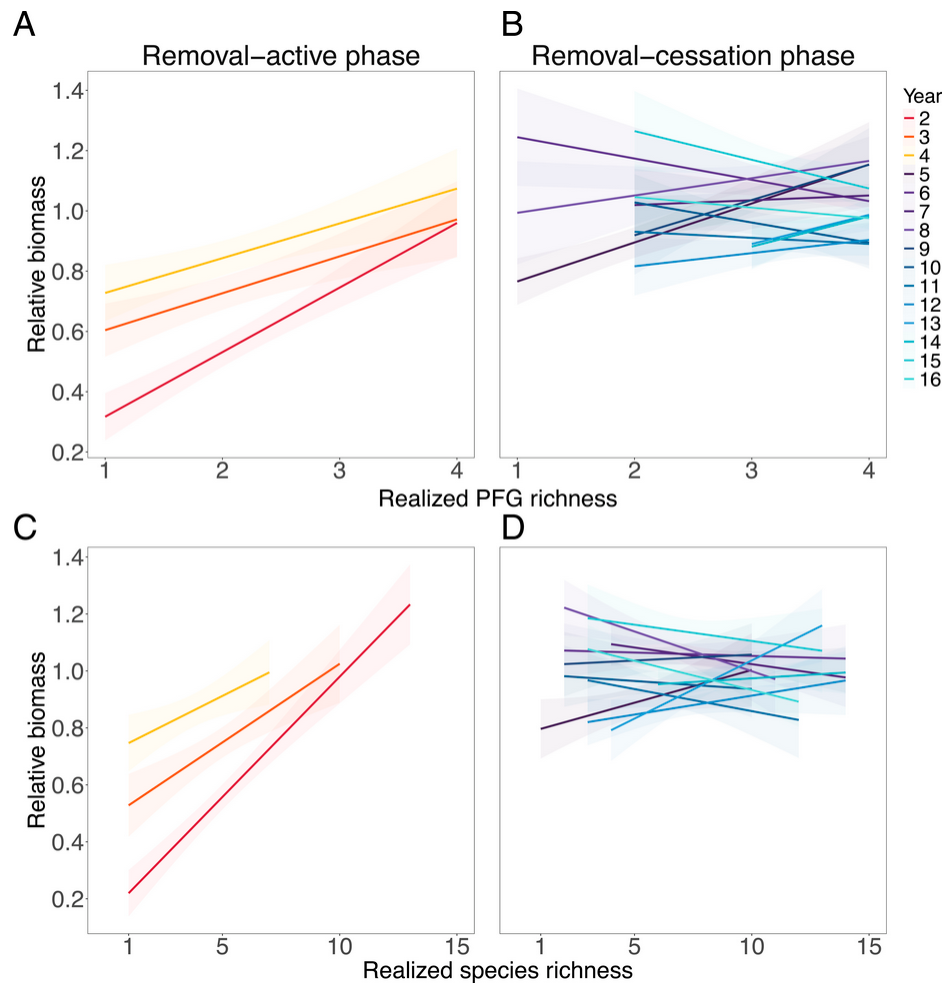
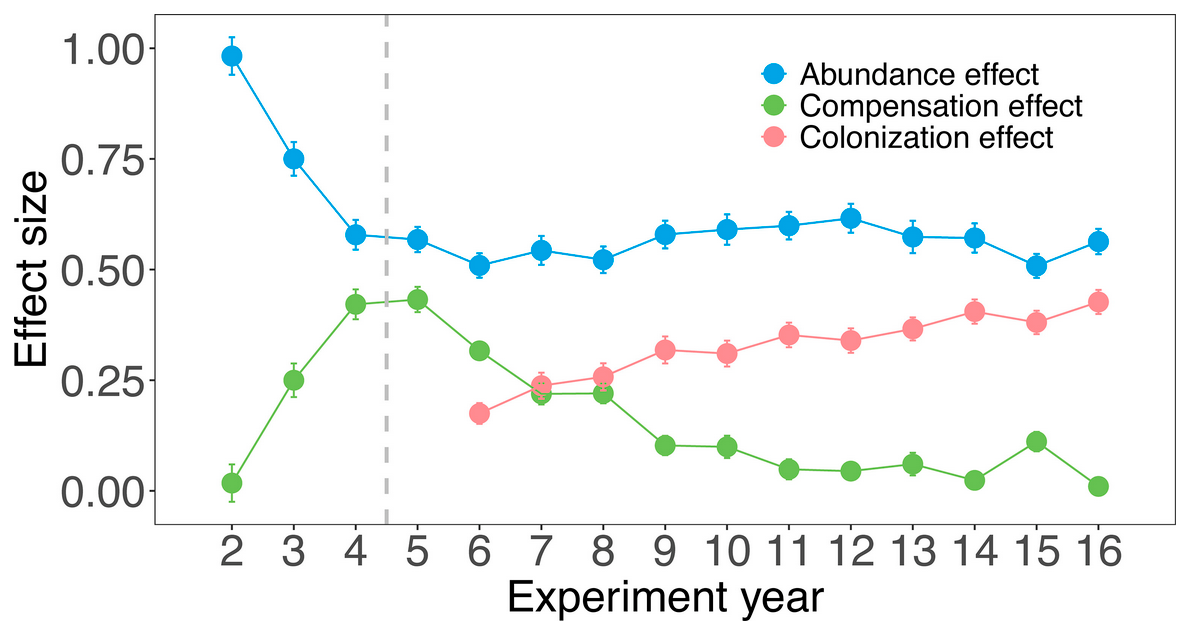
Temporal dynamics of the biodiversity-productivity relationship and its underlying mechanisms (Image by WANG Jing & PAN Qingmin)