
The Institute of Botany, Chinese Academy of Sciences (IBCAS) is one of the oldest comprehensive research institutes in China. It has led the development of plant science in China since it was established in 1928. As the presiding organization, IBCAS has acquired 3 First Prizes and 6 Second Prizes of National Science, 2 Second Prizes of National Technological Invention, and other 134 scientific awards of CAS and provincial level.
The Institute of Botany, Chinese Academy of Sciences (IBCAS) is one of the oldest comprehensive research institutes in China. It has led the development of plant science in China since it was established in 1928.
IBCAS has acquired 3 First Prizes and 7 Second Prizes of National Science, 2 Second Prizes of National Technological Invention, and other 134 scientific awards of CAS and provincial level. IBCAS has become a leading plant research institution focused on:
- - Addressing core scientific and technical challenges in botany, environmental change, and sustainable plant resource use.
- - Integrating plant research across molecular, cellular, individual, species, and ecosystem levels.
- - Advancing ecological civilization, agricultural development, and biodiversity conservation.
IBCAS currently hosts two state key laboratories: State Key Laboratory of Plant Diversity and Specialty Crops and State Key Laboratory of Forage Breeding-by-Design and Utilization. It also comprises seven internal research and support units: Laboratory of Systematic & Evolutionary Botany, Laboratory of Vegetation & Environmental Change, Laboratory of Plant Molecular Physiology, and Laboratory of Photobiology, the Botanical Garden, the Big Data and AI Biodiversity Conservation Research Center, and the Documentation Center.
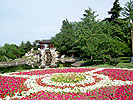
In 2022, the first China National Botanical Garden, jointly established by IBCAS and the Beijing Botanical Garden, was officially inaugurated in Beijing. The South Garden is managed by IBCAS and it is 74 hectares, including 15 gardens and 3 conservatory.
IBCAS is home to the largest herbarium in Asia, storing more than 3 million specimens, including fossils, seeds, liverworts, mosses, ferns and seed plants. The eight field stations in the institute, serving as critical platforms for research on vegetation and environmental changes at various ecosystem levels. Additionally, IBCAS has the CAS Plant Science Data Center, the China Biodiversity Observation and Research Network (Sino BON) etc.
IBCAS hosts the publication of 7 scientific journals, including the Journal of Integrative Plant Biology, the Journal of Systematics and Evolution, and the Journal of Plant Ecology, all of which are published in English and indexed by SCI.
Over the course of nearly a century of development, IBCAS has produced a number of significant scientific and technological achievements, greatly advancing the field of plant science. These contributions have strongly supported major national strategies, including the construction of ecological civilization, the transformation and development of agriculture, and rural revitalization.




The Institute of Botany, Chinese Academy of Sciences (IBCAS) is one of the oldest comprehensive research institutes in China. It has led the development of plant science in China since it was established in 1928. As the presiding organization, IBCAS has acquired 3 First Prizes and 6 Second Prizes of National Science, 2 Second Prizes of National Technological Invention, and other 134 scientific awards of CAS and provincial level.
The Institute of Botany, Chinese Academy of Sciences (IBCAS) is one of the oldest comprehensive research institutes in China. It has led the development of plant science in China since it was established in 1928.
IBCAS has acquired 3 First Prizes and 7 Second Prizes of National Science, 2 Second Prizes of National Technological Invention, and other 134 scientific awards of CAS and provincial level. IBCAS has become a leading plant research institution focused on:
- - Addressing core scientific and technical challenges in botany, environmental change, and sustainable plant resource use.
- - Integrating plant research across molecular, cellular, individual, species, and ecosystem levels.
- - Advancing ecological civilization, agricultural development, and biodiversity conservation.
IBCAS currently hosts two state key laboratories: State Key Laboratory of Plant Diversity and Specialty Crops and State Key Laboratory of Forage Breeding-by-Design and Utilization. It also comprises seven internal research and support units: Laboratory of Systematic & Evolutionary Botany, Laboratory of Vegetation & Environmental Change, Laboratory of Plant Molecular Physiology, and Laboratory of Photobiology, the Botanical Garden, the Big Data and AI Biodiversity Conservation Research Center, and the Documentation Center.
In 2022, the first China National Botanical Garden, jointly established by IBCAS and the Beijing Botanical Garden, was officially inaugurated in Beijing. The South Garden is managed by IBCAS and it is 74 hectares, including 15 gardens and 3 conservatory.
IBCAS is home to the largest herbarium in Asia, storing more than 3 million specimens, including fossils, seeds, liverworts, mosses, ferns and seed plants. The eight field stations in the institute, serving as critical platforms for research on vegetation and environmental changes at various ecosystem levels. Additionally, IBCAS has the CAS Plant Science Data Center, the China Biodiversity Observation and Research Network (Sino BON) etc.
IBCAS hosts the publication of 7 scientific journals, including the Journal of Integrative Plant Biology, the Journal of Systematics and Evolution, and the Journal of Plant Ecology, all of which are published in English and indexed by SCI.
Over the course of nearly a century of development, IBCAS has produced a number of significant scientific and technological achievements, greatly advancing the field of plant science. These contributions have strongly supported major national strategies, including the construction of ecological civilization, the transformation and development of agriculture, and rural revitalization.