
Scientists
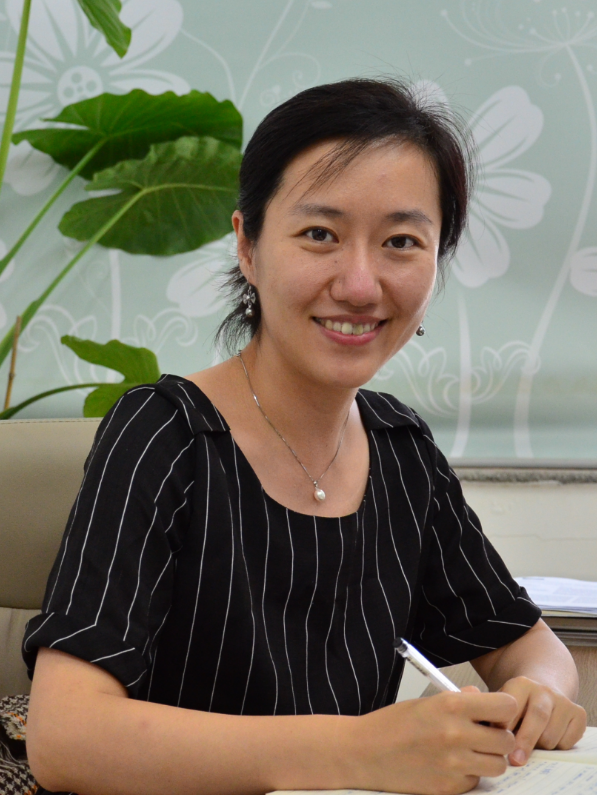
FENG Xiaojuan
Introduction
Research Area
Dr. Feng focuses on the biogeochemical processes regulating the stabilization, transformation and transport of soil organic carbon under global changes. She is specialized at using biomarkers and compound-specific 13C and 14C analysis to examine organic matter sourcing and processing in soils and fluvial systems.
Introduction
Prof. FENG Xiaojuan, Principal Investigator, PhD supervisor.
2003, BSc, Peking University, China;
2005, MSc, University of Toronto, Canada;
2009, PhD, University of Toronto, Canada;
2009-2010, Postdoctoral Scholar, Woods Hole Oceanographic Institution, USA;
2010-2012, Postdoctoral Fellow, ETH Zurich, Switzerland;
2013, joined IBCAS.
2014, received the "NSFC Funds for Excellent Young Scientists"; 2015, received the "MOST 973 Project for Young Scientist"; 2020, received the "National Fund for Distinguished Young Scholars"; 2022, received the "Key Program of National Natural Science Foundation of China".
Present, Deputy Director of IBCAS, Member of the 11th Council of Ecological Society of China, etc.; Editor of JGR-Biogeosciences and Associate or Subject Editor of Global Change Biology and Geochimica et Cosmochimica Acta. Awarded "China Young Female Scientist", "CAS Young Scientist", and "Excellent Supervisor" of CAS.
She has published more than 70 papers in international journals such as PNAS, Nature Climate Change, Nature Geoscience, and Ecology Letters as first or correspondent author.
Publications
(*corresponding author, # co-first author)
[1] Liu T#, Pan Q#, Kang E, Feng X* (2026) Widespread positive priming of dissolved organic carbon decomposition in inland waters. Water Research, 289: 124874.
[2] Jia J#, Zhai G#, Jia Y, Feng X* (2025) Fast decomposition of nitrogen-rich mineral-associated organic matter in soils. Global Change Biology, 31: e70448.
[3] Feng X#*, Zhao Y#, Wang H, Liu C (2025) Iron-organic carbon interactions in wetlands: Implications for wetland carbon preservation under global changes. Global Change Biology, 31: e70300.
[4] Hu W, Cai Y, Li X, Wang C, Jia J*, Feng X* (2025) Microbial carbon accumulation efficiency in global soils resolved via 13C-glucose amendment experiments. Global Biogeochemical Cycles, 39: e2025GB008553.
[5] Liu T, Wang X, Wang S, Zhu E, Hall SJ, Feng X* (2025) Iron-driven fast decomposition of soil carbon under periodic anoxia. Global Change Biology, 31(4): e70184. (Wiley China Excellent Author Program, April-June 2025)
[6] Ma T#, Wang Y#, Dai G, Jia J, Liu Z, Jia Y, Wang S, Zhu E, Zhang X, Haghipour N, Wacker L, Jia B, He J-S, Zhang H, Zhao M, Eglinton TI, Feng X* (2025) Prolonged storage of bound organic carbon in wetland but not upland soils: A 13C and 14C perspective. Geophysical Research Letters, 52(1): e2024GL112491.
[7] Zhang X, Dai G*, Zhai G, Yi W, Ma L, Huang Z, Ye X, Ma W, Wang Y, Zhang P, Feng X* (2024) Root-borne microbial necromass-an overlooked source of grassland soil organic carbon. Geophysical Research Letters, 51(22): e2024GL110908.
[8] Jia J, Zhai G, Jia Y*, Liu X, Ma K, Feng X* (2024) Microbial necromass accrual from newly added labile and native soil carbon in the rhizosphere vs. non-rhizosphere of broadleaved and coniferous trees. Geoderma, 452: 117107.
[9] Jiang Z#, Luo W#, Zhu E, Zhao Y, Liu C, Zhou L, Feng X* (2024) Changing plant phosphorus acquisition strategies in relation to altered soil phosphorus fractions after wetland drainage. Functional Ecology, 38(11): 2433-2446. (Wiley China Excellent Author Program, July-December 2024)
[10] Zhao Y, Liu C, Kang E, Li X, Deng Y, Feng X* (2024) Plant-microbe interactions underpin contrasting enzymatic responses to wetland drainage. Nature Climate Change, 14: 1078-1086.
[11] Liu C#, Zhao Y#, Ma L, Zhai G, Li X, Freeman C, Feng X* (2024) Metallic protection of soil carbon: Divergent drainage effects in Sphagnum vs. non-Sphagnum wetlands. National Science Review, 11(11): nwae178. (Front cover)
[12] Ma L#, Zhu E#, Jia J, Wang Y, Kang E, Yi W, Jiang Z, Dai G, Feng X* (2024) Does microbial carbon use efficiency differ between particulate and mineral-associated organic matter? Functional Ecology, 38(7): 1510-1522.
[13] Zhu E#, Liu Z#, Ma L, Luo J, Kang E, Wang Y, Zhao Y, Jia J, Feng X* (2024) Enhanced mineral preservation rather than microbial residue production dictates the accrual of mineral-associated organic carbon along a weathering gradient. Geophysical Research Letters, 51(6): e2024GL108466. (Front cover/ ESI highly cited paper)
[14] Wang S, Liu T*, Zhu E, He C, Shi Q, Feng X* (2024) Potential retention of dissolved organic matter by soil minerals during wetland water-table fluctuations. Water Research, 254: 121412.
[15] Zhao Y, Jia J, Liu C, Feng X* (2024) Carbon preservation in sedimentary deposits: Beyond mineral protection. The Innovation, 5: 100576. (Commentary)
[16] Jiang Z#, Wang X#, Liu T, Feng X* (2024) Comparing the temperature sensitivity of organic matter decomposition in oxic and oxygen-deprived soils. Soil Ecology Letters, 6: 230189.
[17] Feng X*, Dai G, Liu T, Jia J, Zhu E, Liu C, Zhao Y, Wang Y, Kang E, Xiao J, Li W* (2024) Understanding the mechanisms and potential pathways of soil carbon sequestration from the biogeochemistry perspective. Science China Earth Sciences, 67: 3386-3396.
[18] Liu C#, Wang S#, Zhao Y, Wang Y, Wang Y, Zhu E, Jia J, Liu Z, He J-S, Feng X* (2023) Enhanced microbial contribution to mineral-associated organic carbon accrual in drained wetlands: beyond direct lignin-iron interactions. Soil Biology & Biochemistry, 185: 109152.
[19] Zhao Y, Liu C, Li X, Ma L, Zhai G, Feng X* (2023) Sphagnum increases soil’s sequestration capacity of mineral-associated organic carbon via activating metal oxides. Nature Communications, 14: 5052.
[20] Zhu E#, Liu Z#, Wang S, Wang Y, Liu T, Feng X* (2023) Organic carbon and lignin protection by metal oxides versus silicate clay: Comparative study based on wetland and upland soils. Journal of Geophysical Research: Biogeosciences, 128: e2023JG007474. (JGR: B 2023 Top Cited Article)
[21] Cai Y, Feng X* (2023) Substrate and community regulations on microbial necromass accumulation from newly added and native soil carbon. Biology and Fertility of Soils, 59: 763-775.
[22] Feng X*, Wang S. (2023) Plant influences on soil microbial carbon pump efficiency. Global Change Biology, 29(14): 3854-3856. (Invited perspective/ESI highly cited paper)
[23] Wang Y, Wang S, Liu C, Zhu E, Jia J, Feng X* (2023) Shifting relationships between SOC and molecular diversity in soils of varied carbon concentrations: Evidence from drained wetlands. Geoderma, 433: 116459.
[24] Jia J, Liu Z, Haghipour N, Wacker L, Zhang H, Sierra CA, Ma T, Wang Y, Chen L, Luo A, Wang Z, He J-S, Zhao M, Eglinton TI, Feng X* (2023) Molecular 14C evidence for contrasting turnover and temperature sensitivity of soil organic matter components. Ecology Letters, 26(5): 778-788. (Front cover)
[25] Wang J, Ma T, Zhang F, Hilton R.G., Feng X*, Jin Z* (2023) The role of earthquakes and storms in the fluvial export of terrestrial organic carbon along the eastern margin of the Tibetan Plateau: A biomarker perspective. Frontiers in Earth Science, 10: 1090983.
[26] Liu T, Liu X, Pan Q, Liu S, Feng X* (2023) Hydrodynamic and geochemical controls on soil carbon mineralization upon entry into aquatic systems. Water Research, 229: 119499.
[27] Jia Y, Liu Z, Zhou L, Liu X, Ma K, Feng X* (2023) Soil organic carbon sourcing variance in the rhizosphere vs. non-rhizosphere of two mycorrhizal tree species. Soil Biology & Biochemistry, 176: 108884.
[28] Liu N, Hu H, Ma W, Deng Y, Dimitrov D, Wang Q, Shrestha N, Su X, Feng K, Liu Y, Hao B, Zhang X, Feng X*, Wang Z* (2023) Relationships between soil microbial diversities across an aridity gradient in temperate grasslands: soil microbial diversity relationships. Microbial Ecology, 85: 1013-1027.
[29] Wang Y, Liu X, Zhang X, Dai G, Wang Z, Feng X* (2022) Evaluating wetland soil carbon stability related to iron transformation during redox oscillations. Geoderma 428: 116222.
[30] Dai G, Zhu S, Cai Y, Zhu E, Jia Y, Ji C, Tang Z, Fang J, Feng X* (2022) Plant-derived lipids play a crucial role in forest soil carbon accumulation. Soil Biology & Biochemistry, 168: 108645.
[31] Cai Y, Ma T, Wang Y, Jia J, Jia Y, Liang C, Feng X* (2022) Assessing the accumulation efficiency of various microbial carbon components in soils of different minerals. Geoderma, 407: 115562.
[32] Zhao Y, Liu C, Wang S, Wang Y, Liu X, Luo W, Feng X* (2021) "Triple locks" on soil organic carbon exerted by sphagnum acid in wetlands. Geochimica et Cosmochimica Acta, 315: 24-37.
[33] Liu N, Hu H, Ma W, Deng Y, Wang Q, Luo A, Meng J, Feng X*, Wang Z* (2021) Relative importance of deterministic and stochastic processes on soil microbial community assembly in temperate grasslands. Microorganisms, 9: 1929.
[34] Jia Y, Zhai G, Zhu S, Liu X, Schmid B, Wang Z, Ma K, Feng X* (2021) Plant and microbial pathways driving plant diversity effects on soil carbon accumulation in subtropical forest. Soil Biology & Biochemistry, 161: 108375.
[35] Liu C, Wang S, Zhu E, Jia J, Zhao Y, Feng X* (2021) Long-term drainage induces divergent changes of soil organic carbon contents but enhances microbial carbon accumulation in fen and bog. Geoderma, 404: 115343.
[36] Wang X#, Liu T#, Wang L, Liu Z, Zhu E, Wang S, Cai Y, Zhu S, Feng X* (2021) Spatial-temporal variations in riverine carbon strongly influenced by local hydrological events in an alpine catchment. Biogeosciences, 18: 3015-3028.
[37] Wang S, Jia Y, Liu T, Wang Y, Liu Z, Feng X* (2021) Delineating the role of calcium in the large-scale distribution of metal-bound organic carbon in soils. Geophysical Research Letters, 48(10): e2021GL092391.
[38] Zhang X, Jia J, Chen L, Chu H, He J-S, Zhang Y, Feng X* (2021) Aridity and NPP constrain contribution of microbial necromass to soil organic carbon in the Qinghai-Tibet alpine grasslands. Soil Biology and Biochemistry, 156: 108213.
[39] Zhu E#, Cao Z#, Jia J, Liu C, Zhang Z, Wang H, Dai G, He J-S, Feng X* (2021) Inactive and inefficient: Warming and drought effect on microbial carbon processing in alpine grassland at depth. Global Change Biology, 27(10): 2241-2253.
[40] Liu T, Wang X, Zhu E, Liu Z, Zhang X, Guo J, Liu X, He C, Hou S, Fu P, Shi Q, Feng X* (2021) Evolution of dissolved organic matter composition along the upper Mekong (Lancang) River. ACS Earth and Space Chemistry, 5(2): 319-330.
[41] Eglinton TI*, Galy VV*, Hemingway JD, Feng X, et al. (2021) Climate control on terrestrial biospheric carbon turnover. Proceedings of the National Academy of Sciences of the United States of America, 118(8): e2011585118. (ESI highly cited paper)
[42] Zhang X#, Dai G#, Ma T, Liu N, Hu H, Ma W, Zhang JB, Wang Z, Peterse F, Feng X* (2020) Links between microbial biomass and necromass components in the top- and subsoils of temperate grasslands along an aridity gradient. Geoderma, 379: 114623.
[43] Ma T, Dai G, Zhu S, Chen D, Chen L, Lü X, Wang X, Zhu J, Zhang Y, He J-S, Bai Y, Han X, Feng X* (2020) Vertical variations in plant- and microbial-derived carbon components in grassland soils. Plant and Soil, 446: 441-455.
[44] Zhu E, Liu T, Zhou L, Wang S, Wang X, Zhang Z, Wang Z, Bai Y, Feng X* (2020) Leaching of organic carbon from grassland soils under anaerobiosis. Soil Biology & Biochemistry, 141: 107684.
[45] Lee H, Galy V, Feng X, Ponton C, Galy A, France-Lanord C, Feakins S.J.* (2019) Sustained wood burial in the Bengal Fan over the last 19 My. Proceedings of the National Academy of Sciences of the United States of America, 116: 22518-22525.
[46] Liu N, Hu H, Ma W, Deng Y, Liu Y, Hao B, Zhang X, Dimitrov D, Feng X*, Wang Z* (2019) Contrasting biogeographic patterns of bacterial and archaeal diversity in the top- and subsoils of temperate grasslands. mSystems, 4(5): e00566-19.
[47] Cao Z#, Jia Y#, Cai Y, Wang X, Hu H, Zhang J, Jia J, Feng X* (2019) Past aridity's effect on carbon mineralization potentials in grassland soils. Biogeosciences, 16: 3605-3619.
[48] Jia J, Cao Z, Liu C, Zhang Z, Lin L, Wang Y, Haghipour N, Wacker L, Bao H, Dittmar T, Simpson MJ, Yang H, Crowther TW, Eglinton TI, He JS*, Feng X* (2019) Climate warming alters subsoil but not topsoil carbon dynamics in alpine grassland. Global Change Biology, 25: 4383-4393. (Most downloaded GCB article)
[49] Dai G, Zhu E, Liu Z, Wang Y, Zhu S, Wang S, Ma T, Jia J, Wang X, Hou S, Fu P, Peterse F, Feng X* (2019) Compositional characteristics of fluvial particulate organic matter exported from the world's largest alpine wetland. Journal of Geophysical Research-Biogeosciences, 124: 2709-2727.
[50] Jia J, Feng X*, Graf Pannatier E, Wacker L, McIntyre C, van der Voort T, Montlucon D, Eglinton TI (2019) 14C characteristics of dissolved lignin along a forest soil profile. Soil Biology & Biochemistry, 135: 407-410.
[51] Zhu S#, Dai G#, Ma T, Chen L, Chen D, Lü X, Wang X, Zhu J, Zhang Y, Bai Y, Han X, He J-S, Feng X* (2019) Distribution of lignin phenols in comparison with plant-derived lipids in the alpine versus temperate grassland soils. Plant and Soil, 439: 325-338.
[52] Ma T#, Dai G#, Zhu S, Chen D, Chen L, Lü X, Wang X, Zhu J, Zhang Y, Ma W, He J-S, Bai Y, Han X, Feng X* (2019) Distribution and preservation of root- and shoot-derived carbon components in soils across the Chinese-Mongolian grasslands. Journal of Geophysical Research-Biogeosciences, 124: 420-431.
[53] Ma T, Zhu S, Wang Z, Chen D, Dai G, Feng B, Su X, Hu H, Li K, Han W, Liang C, Bai Y, Feng X* (2018) Divergent accumulation of microbial necromass and plant lignin components in grassland soils. Nature Communications, 9: 3480. (ESI highly cited paper)
[54] Liu T#, Wang L#, Feng X*, Zhang J, Ma T, Wang X, Liu Z (2018) Comparing soil carbon loss through respiration and leaching under extreme precipitation events in arid and semiarid grasslands. Biogeosciences, 15: 1627-1641.
[55] Dai G, Ma T, Zhu S, Liu Z, Chen D, Bai Y, Chen L, He J-S, Zhu J, Zhang Y, Lü X, Wang X, Han X, Feng X* (2018) Large-scale distribution of molecular components in Chinese grassland soils: The influences by input and decomposition processes. Journal of Geophysical Research-Biogeosciences, 123: 239-255.
[56] Cai Y, Tang Z, Xiong G, Xie Z, Liu Z, Feng X* (2017) Different composition and distribution patterns of mineral-protected versus hydrolysable lipids in shrubland soils. Journal of Geophysical Research-Biogeosciences, 122: 2206-2218.
[57] Feng X*, Vonk JE, Griffin C, Zimov N, Montlucon DB, Wacker L, Eglinton TI. (2017) 14C variation of dissolved lignin in arctic river systems. ACS Earth and Space Chemistry, 1: 334-344.
[58] Wang Y, Wang H, He J-S, Feng X* (2017) Iron-mediated soil carbon response to water-table decline in an alpine wetland. Nature Communications, 8: 15972.
[59] Jia J, Feng X*, He J-S, He H, Lin L, Liu Z (2017) Comparing microbial carbon sequestration and priming in the subsoil versus topsoil of a Qinghai-Tibetan alpine grassland. Soil Biology & Biochemistry, 104: 141-151.
[60] Feng X*, Feakins SJ*, Liu Z, Ponton C, Wang RZ, Karkabi E, Galy V, Berelson WM, Nottingham AT, Meir P, West AJ (2016) Source to sink: Evolution of lignin composition in the Madre de Dios River system with connection to the Amazon basin and offshore. Journal of Geophysical Research-Biogeosciences, 121: 1316-1338.
[61] Dai G, Zhu S, Liu Z, Chen L, He J-S, Feng X* (2016) Distribution of fatty acids in the alpine grassland soils of the Qinghai-Tibetan Plateau. Science China Earth Sciences, 59: 1329-1338.
[62] Feng X*, Gustafsson O, Holmes RM, Vonk JE, van Dongen BE, Semiletov IP, Dudarev OV, Yunker MB, Macdonald RW, Wacker L, Montlucon DB, Eglinton TI (2015) Multimolecular tracers of terrestrial carbon transfer across the pan-Arctic: 14C characteristics of sedimentary carbon components and their environmental controls. Global Biogeochemical Cycles, 29: 1855-1873. (Front cover)
[63] Feng X*, Gustafsson O, Holmes RM, Vonk JE, van Dongen BE, Semiletov IP, Dudarev OV, Yunker MB, Macdonald RW, Montlucon DB, Eglinton TI (2015) Multi-molecular tracers of terrestrial carbon transfer across the pan-Arctic: Comparison of hydrolysable components with plant wax lipids and lignin phenols. Biogeosciences, 12: 4841-4860.
[64] Feng X*, Vonk JE, van Dongen BE, Gustafsson O, Semiletov IP, Dudarev OV, Wang Z, Montlucon DB, Wacker L, Eglinton TI (2013) Differential mobilization of terrestrial carbon pools in Eurasian Arctic river basins. Proceedings of the National Academy of Sciences of the United States of America, 110: 14168-14173.
[65] Feng X*, Benitez-Nelson BC, Montlucon DB, Prahl FG, McNichol AP, Xu L, Repeta DJ, Eglinton TI (2013) 14C and 13C characteristics of higher plant biomarkers in Washington margin surface sediments. Geochimica et Cosmochimica Acta, 105: 14-30.
[66] Feng X*, Simpson MJ* (2011) Molecular-level methods for monitoring soil organic matter responses to global climate change (invited review). Journal of Environmental Monitoring, 13: 1246-1254.
[67] Feng X, Hills K, Simpson AJ, Whalen JK, Simpson MJ* (2011) The role of biodegradation and photo-oxidation in the transformation of terrestrial organic matter. Organic Geochemistry, 42: 262-274.
[68] Feng X, Simpson AJ, Gregorich EG, Elberling B, Hopkins DW, Sparrow AD, Novis PM, Greenfield LG, Simpson MJ* (2010) Chemical characterization of microbial-dominated soil organic matter in the Garwood Valley, Antarctica. Geochimica et Cosmochimica Acta, 74: 6485-6498.
[69] Feng X, Simpson AJ, Schlesinger WH, Simpson MJ* (2010) Altered microbial community structure and organic matter composition under elevated CO2 and N fertilization in the Duke Forest. Global Change Biology, 16: 2104-2116.
[70] Feng X, Xu Y, Jaffé R, Schlesinger WH, Simpson MJ* (2010) Turnover rates of hydrolysable aliphatic lipids in Duke Forest soils determined by compound specific 13C isotopic analysis. Organic Geochemistry, 41: 573-579.
[71] Feng X, Simpson MJ* (2009) Temperature and substrate controls on microbial phospholipid fatty acid composition during incubation of grassland soils constrasting in organic matter quality. Soil Biology & Biochemistry, 41: 804-812.
[72] Feng X, Simpson AJ, Wilson K, Williams DD, Simpson MJ* (2008) Increased cuticular carbon sequestration and lignin oxidation in response to soil warming. Nature Geoscience, 1: 836-839.
[73] Feng X, Simpson MJ* (2008) Temperature responses of individual soil organic matter components. Journal of Geophysical Research-Biogeosciences, 113: G03036, doi:10.1029/2008JG000743.
[74] Feng X, Simpson MJ* (2007) The distribution and degradation of biomarkers in Alberta grassland soil profiles. Organic Geochemistry, 38: 1558-1570.
[75] Feng X, Nielsen LL, Simpson MJ* (2007) Responses of soil organic matter and microorganisms to freeze-thaw cycles. Soil Biology & Biochemistry, 39: 2027-2037.
[76] Feng X, Simpson AJ, Simpson MJ* (2006) Investigating the role of mineral-bound humic acid in phenanthrene sorption. Environmental Science & Technology, 40: 3260-3266.
[77] Feng X, Simpson AJ, Simpson MJ* (2005) Chemical and mineralogical controls on humic acid sorption to clay mineral surfaces. Organic Geochemistry, 36: 1553-1566.