News
Scientists Report Increased Rather Than Decreased Soil Carbon Accumulation in Boreal Sphagnum Peatlands Under Warming
A recent study shows that warming enhances soil carbon accumulation in boreal Sphagnum peatlands through increased plant productivity and iron protection as well as inhibited microbial decomposition. These responses stand in sharp contrast to the warming-enhanced soil carbon mineralization in boreal forests and tundra, demonstrating the vital but overlooked role of Sphagnum peatlands in counteracting boreal carbon loss under future warming.
This research was led by Professor FENG Xiaojuan from the Institute of Botany, Chinese Academy of Sciences, in collaboration with researchers from University of Helsinki and the Finnish Meteorological Institute. The findings were published inNature Ecology & Evolutionon February 9, 2026.
Boreal ecosystems store twice as much carbon as the atmosphere and warm faster than the global average. The current paradigm, based on observations from boreal forests and tundra, posits that warming will accelerate boreal carbon loss by activating microbial degraders. However, boreal regions also harbor extensive Sphagnum peatlands, which constitute ~20% of the boreal biome and store ~40% of boreal carbon stocks. Characterized by high moisture and acidic, antimicrobial environments, Sphagnum peatlands may exhibit divergent responses to warming compared to other, drier boreal ecosystems. Yet, how warming affects the massive soil carbon reservoir in boreal Sphagnum peatlands remains poorly understood. Filling this knowledge gap is crucial for accurately predicting carbon-climate feedbacks in the boreal region.
To fill the gap, the researchers synthesized 735 paired observations from 93 studies based on field warming experiments across boreal regions, and compared the response of Sphagnum peatlands versus vascular plant-dominated wetlands, boreal forests, and tundra to warming. The researchers further leveraged two long-term (6 and 16 yrs) open-top chamber warming experiments in Finland for more detailed, mechanistic investigations.
The researchers demonstrated that warming consistently enhanced soil carbon accumulation in boreal Sphagnum peatlands through three pathways: (1) warming stimulated Sphagnum growth and ecosystem productivity in moisture-unlimited boreal peatlands; (2) warming increased Sphagnum synthesis of antimicrobial secondary metabolites, with cascading negative effects on soil microbial decomposition capacity; (3) warming promoted iron protection of soil carbon via the accumulation of reactive iron (hydr)oxides driven by the elevated growth of the "rust engineer" Sphagnum. An estimate suggested that warming-induced increase of soil carbon in boreal Sphagnum peatlands may offset nearly half of the boreal forest carbon sink decline or heterotrophic respiration increase in Arctic tundra under warming.
Overall, this study highlights the unique metabolic and ecosystem responses of Sphagnum peatlands to warming, and represents a timely advance in understanding ecosystem-specific mechanisms governing soil carbon dynamics under warming.
"Our study reveals the crucial yet overlooked role of Sphagnum peatlands in buffering boreal ecosystem carbon emissions under future climate warming. This information is important for us to understand how boreal ecosystems respond to climate change. Incorporating the warming response of Sphagnum peatlands into Earth system models would greatly improve future predictions of boreal carbon-climate feedbacks," said Professor Feng.
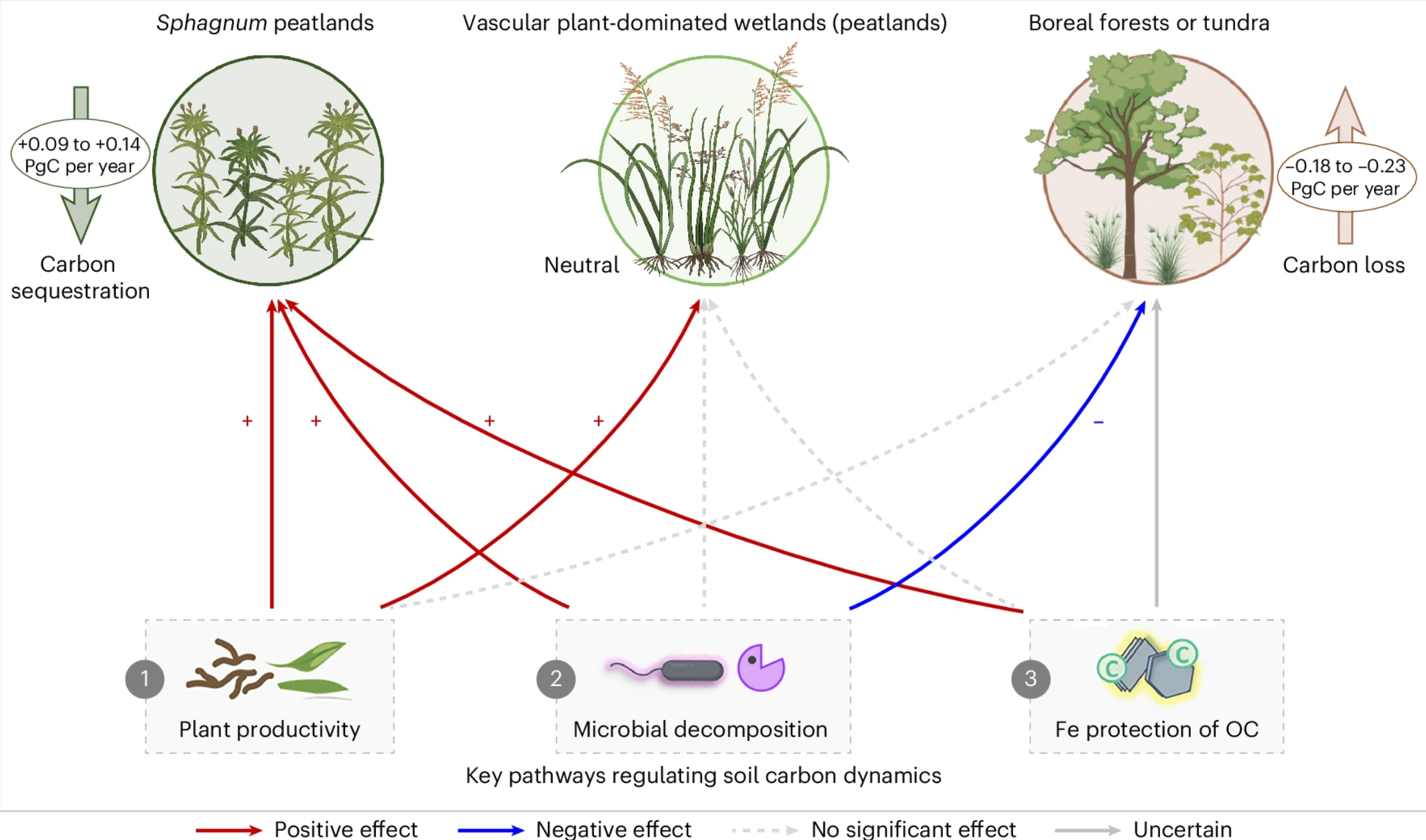
Conceptual framework illustrating contrasting carbon dynamics under warming for different boreal ecosystems (Credit by ZHAO Yunpeng)
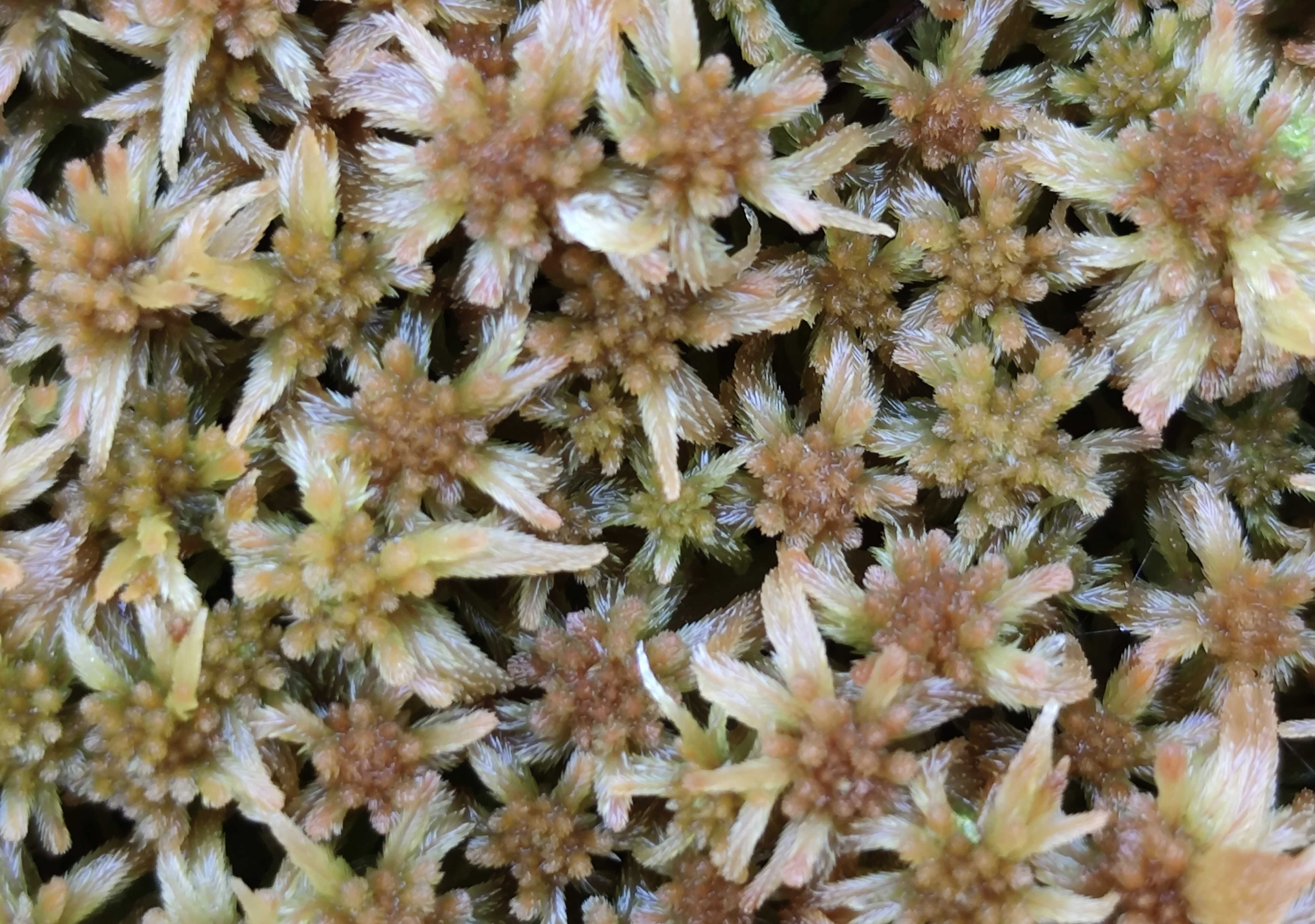
Sphagnum moss, the flagship species of boreal peatlands (Photo by by ZHAO Yunpeng)